<Back to news
20 Apr 2026
Part 2 of School Readiness Series: Purposeful Play Builds Real Learning Skills
Written By Heidi Lopez-Gamez
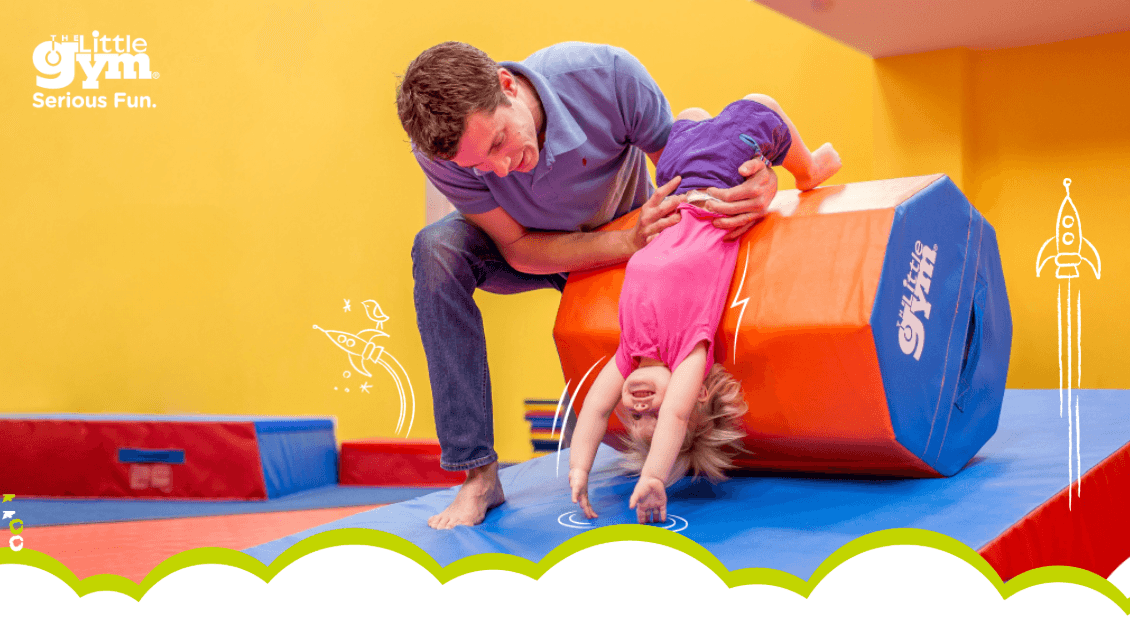
Why structured fun helps children feel school‑ready long before the first bell rings.
When we picture school readiness, we often imagine children practising letters, counting objects, or learning to write their name. But some of the most important school‑ready skills aren’t academic at all.
They’re behavioural.
They’re social.
They’re emotional.
And they’re built through something children naturally love: play.
At The Little Gym, purposeful play is at the heart of everything we do. To children, it looks like fun. To us, it’s carefully structured learning that mirrors the rhythm of a classroom, helping children feel confident and capable when they eventually step into one.
Why structure matters in early childhood
Young children thrive when play and structure work together. Research from the American Academy of Paediatrics highlights that guided, active play supports not only physical development but also the social and behavioural skills children need for learning (AAP, 2018). Predictable routines help children feel secure, while structured play strengthens the executive function skills that underpin school success.
That’s why every class at The Little Gym follows a familiar flow. Children know what to expect, when to listen, when to explore, and how to move from one activity to the next. Over time, this rhythm becomes second nature.
And that familiarity is exactly what helps school feel less overwhelming.
Listening and following instructions
Teacher‑led moments are short, engaging, and intentionally designed to help children practise:
- Listening with focus
- Processing verbal instructions
- Responding to cues
- Waiting for their turn to act
These behaviours are closely linked to executive function the mental skills that help children manage attention, follow instructions, and regulate their behaviour (Diamond, 2013). When children practise these skills in a playful setting, they build the foundations for classroom learning.
Taking turns and cooperating
Group activities offer rich opportunities for social learning. In every class, children practise:
- Sharing equipment
- Taking turns
- Working together
- Encouraging one another
These experiences build empathy, patience, and the ability to collaborate skills that help children form positive relationships with peers and teachers.
Transitioning smoothly between activities
Transitions are a big part of school life, yet they can be challenging for young children. Moving from one station to another at The Little Gym helps children learn to:
- Shift attention
- Let go of one activity to begin another
- Follow a sequence
- Manage emotions during change
Practising transitions in a playful, low‑pressure environment builds flexibility and resilience, qualities that make classroom routines feel far more manageable.
Building independence through guided exploration
Alongside structure, children need freedom. During exploration time, they choose activities, try new skills, and take safe risks. This nurtures:
- Confidence
- Curiosity
- Problem‑solving
- Self‑directed learning
This balance, support paired with independence, mirrors the expectations of early school years, where children are encouraged to explore while developing responsibility for their own learning.
Why this matters for school readiness
When children experience this blend of structure, social learning, and independence week after week, they begin to internalise the behaviours that help them thrive in school. They know how to listen, how to wait, how to try, and how to keep going.
So when they start school, it doesn’t feel unfamiliar.
It feels like the next natural step.
A simple takeaway for parents
If you’re thinking about preparing your child for school, remember that readiness isn’t just about early academics. It’s about helping children feel:
- Comfortable in a structured environment
- Confident in group settings
- Able to follow routines
- Ready to try new things
Purposeful play builds these skills in a way that feels joyful, natural, and developmentally appropriate.
At The Little Gym, every class is designed with this bigger picture in mind: helping children build the everyday learning behaviours that make school feel exciting and not intimidating.
Coming next
In Part 3, we’ll explore howconfidence grows without competition, and why celebrating effort over comparison helps children become brave, resilient learners.
If you’re curious about how The Little Gym can support your child’s school‑readiness journey, now is a wonderful time to try a class and see purposeful play in action.
References
American Academy of Paediatrics. (2018).The Importance of Play in Promoting Healthy Child Development and Maintaining Strong Parent-Child Bonds.
Diamond, A. (2013).Executive Functions. Annual Review of Psychology, 64, 135–168.
NHS. (n.d.).Early Years Development: Social and Emotional Development & Learning Behaviours