<Back to news
28 Oct 2026
Screen time and Moving to Learn: The Importance of Active Play in Early Childhood Education
Written by Erin Lamb
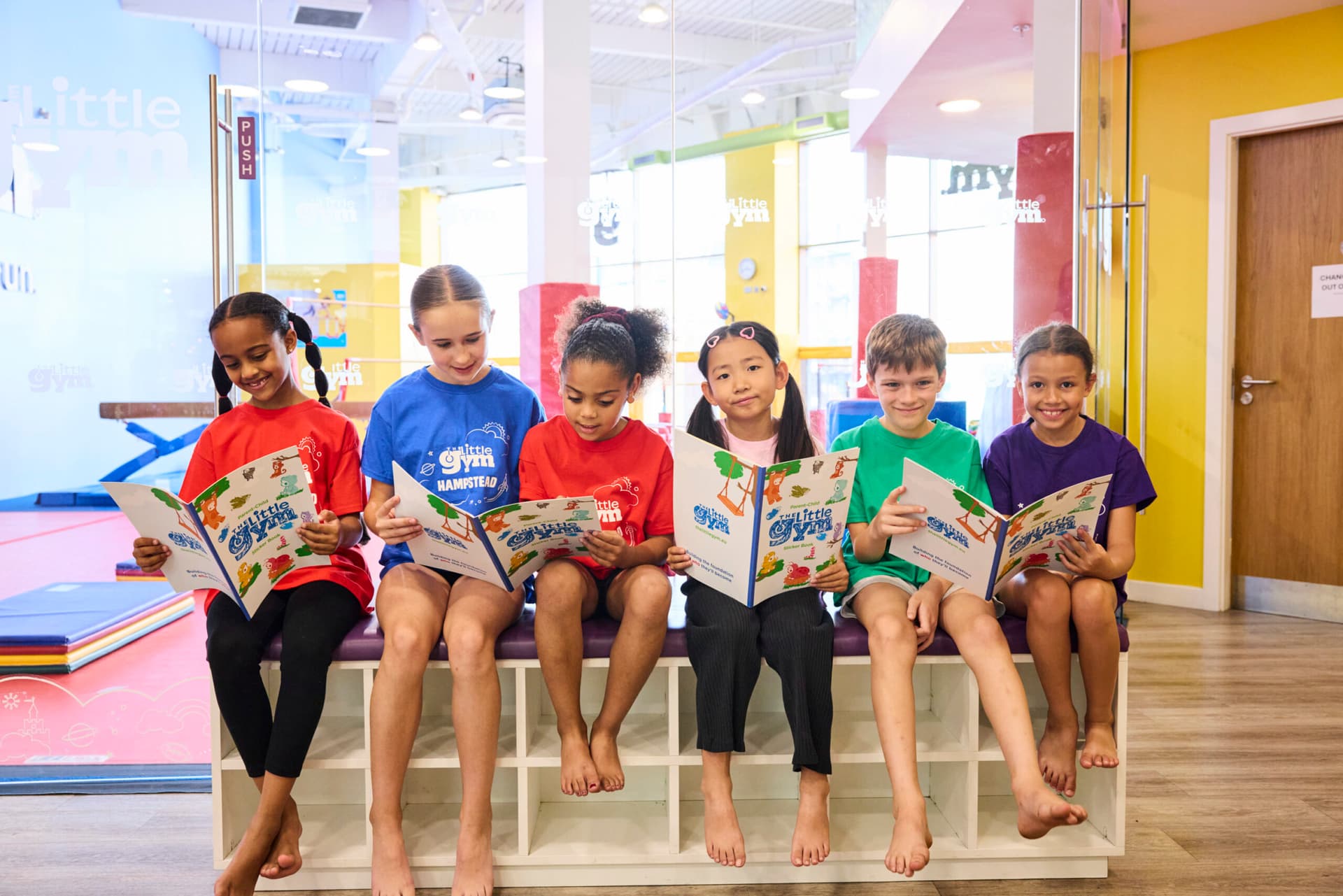
As concerns grow about children’s screen time in schools, we explore why movement, active play and real-world experiences remain essential to childhood development.
Technology has become an increasingly familiar part of children’s lives, from interactive learning in the classroom to entertainment at home. While digital tools can offer valuable educational opportunities, growing concerns about the amount of time children spend in front of screens have prompted important conversations about their health and development.
In October 2026, the BBC reported that more than 150 clinicians, including GPs and paediatricians, had warned that extensive screen use in schools could be affecting children’s physical and developmental health. The clinicians called for clearer guidance on educational technology, raising concerns about eyesight, hearing, speech development and the wider implications of excessive screen exposure.
The report also highlighted research suggesting that the prevalence of short-sightedness among children and adolescents has increased considerably over recent decades. Although screen use is only one factor in a complex picture, the clinicians argued that children’s learning environments should provide a healthier balance between technology and other active learning experiences.
Importantly, this is not an argument that technology has no place in education. Rather, it raises a question that matters to every parent and educator: are children getting enough opportunities to move, explore and learn through physical experiences?
At The Little Gym Wandsworth, Chiswick & Wimbledon, we believe that children need to have active play firmly planted in their routine to ensure a healthy child, physically, mentally and emotionally.
Movement is more than exercise; learning means doing
When we think about physical activity, we often focus on its obvious benefits: stronger muscles, improved fitness and healthy habits. But movement also plays an important role in how young children discover their surroundings and develop new skills.
During early childhood, children learn by doing. Reaching for an object, balancing on a beam, crawling through a tunnel or learning to land safely from a jump gives them opportunities to understand their bodies and interact with the world around them.These experiences help children develop fundamental movement skills, including balance, coordination, spatial awareness and body control.
They also encourage children to experiment. What happens if they move their feet further apart? Can they reach a little higher? How can they get across an obstacle without losing their balance? Discovering what they can do becomes an amazing part of our classes, for both teachers and parents to watch. Each new challenge provides an opportunity to practise, adapt and try again. Unlike activities that require children to remain seated for extended periods, active play encourages them to engage their bodies and senses. It allows children to learn through movement, exploration and interaction rather than observation alone.
Building physical competence at an early age
Physical competence is the ability to move with confidence, control and coordination, adapting to different physical challenges as children grow. Developing these skills from an early age sky rockets development. A physically competent child is also an incredibly confident child. Enjoyment of physical activity helps lay the foundations for an active lifestyle.
During early childhood, children develop physical competence through repeated opportunities to explore what their bodies can do. Learning to balance, climb, roll, jump and change direction helps them build body awareness, strength and coordination. Just as importantly, mastering a new movement gives children the confidence to attempt something unfamiliar, persevere when a skill feels difficult and recognise their own progress.
As highlighted in the BBC’s recent report on screen time in schools, there are growing concerns about whether children are getting enough opportunities to move throughout the day. While technology can support learning, screen-based activities are often sedentary. When they replace opportunities for active play, children may have fewer chances to practise the fundamental movement skills that develop through physical exploration. For example, a child might spend time watching a video about animals on a tablet, learning to identify different species but having little opportunity to practise movement skills. By contrast, an imaginative animal game could encourage them to hop like a frog, crawl like a bear or balance like a flamingo. Research also suggest that doing provides better memory retention.
This isn’t about eliminating screens altogether. Instead, it is about creating a healthy balance between digital learning and experiences that encourage children to use their bodies, interact with others and explore their surroundings. Physical competence develops through practice, and children need regular opportunities to move in order to build it.
At The Little Gym, gymnastics provides a fun, structured environment in which children can develop these foundations. From navigating obstacle courses to learning new gymnastics skills, each activity offers opportunities to practise movement, respond to challenges and build confidence at their own pace.
Our focus is not simply on teaching children to perform a particular skill. It is about helping them become confident, capable movers who feel comfortable trying new things, both inside and outside the gym. We believe it pays a huge part in education.
Active play supports learning IN and BEYOND the classroom
Physical development and cognitive development are closely connected.
Play gives children opportunities to make decisions, solve problems, remember instructions and respond to changing situations. A simple obstacle course, for example, might require a child to listen to directions, work out where to place their feet, remember the order of activities and adjust their movements as they go.
Group activities introduce additional challenges. Children may need to wait for their turn, follow a sequence, copy a movement or coordinate their actions with others. These experiences encourage skills such as attention, listening, planning and self-regulation.
Movement sessions can also provide opportunities to practise following multi-step instructions in a fun, engaging environment. Rather than sitting still while learning a sequence, children can physically act it out, connecting words and instructions with movement.
This does not mean that physical activity replaces classroom learning or that every movement activity produces measurable academic improvements. Instead, it highlights the value of giving children varied opportunities to learn in different ways and the importance of having physical activity in their routine.
The Little Gym uniquely follows a curriculum that uses gymnastics as a vehicle for childhood development. So you can rely on your weekly class to enrich them in different learning dimensions, whilst being the best part of your little one’s week.
Children benefit from a rich combination of experiences: listening, observing, experimenting, talking, creating and moving. A balanced childhood makes room for all of them.
For parents, these experiences are an important reminder that children’s development depends on having a variety of opportunities to learn, both on and away from screens. The UK Chief Medical Officers recommend that children aged one to five spend at least three hours being physically active throughout the day, including active and outdoor play. For children aged three to four, at least one hour should involve moderate-to-vigorous physical activity. These recommendations highlight the importance of making movement a regular part of childhood, alongside opportunities for learning, rest and social interaction.
At The Little Gym Wandsworth, Chiswick & Wimbledon, we bring movement and learning together through a curriculum designed around children’s developmental stages. Our classes offer a dedicated opportunity for children to explore physical challenges, practise new skills and discover what they can achieve in a safe and supportive environment. In a world where screens are increasingly part of everyday life, making space for active, hands-on experiences is how parents can support their child’s development.
References
Mitchell, O. and Goldsmith, A. (2026) ‘Cut screen time in classrooms to avoid long-term health issues, clinicians urge’, BBC News. Available at: BBC News article (Accessed: 22 October 2026).
Department of Health and Social Care (2026) UK Chief Medical Officers’ physical activity guidelines. GOV.UK. Available at: UK Chief Medical Officers’ physical activity guidelines (Accessed: 22 October 2026).